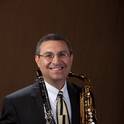
University Distinguished Professor of Music
Dr. John Cipolla is a highly esteemed music educator and University Distinguished Professor at Western Kentucky University, specializing in clarinet and saxophone. Renowned for his exceptional teaching skills, he has made a lasting impact on the institution and its music department. Beyond his role as an educator, Dr. Cipolla serves as a mentor, creating a supportive learning environment and sharing wisdom in various aspects of life. Students consider him their best professor and a source of inspiration. An accomplished performer and recording artist, Dr. Cipolla regularly performs, teaches, and judges competitions across the USA, Europe, and South America. He has collaborated with prestigious orchestras and showcased his talents as a clarinetist and saxophonist on renowned labels such as Sony, ECM New Series, and Centaur. Before transitioning to full-time teaching, Dr. Cipolla had a diverse career as a woodwind player in New York City. He performed and recorded with various artists and ensembles, including The New York City Opera, St. Luke’s Chamber Orchestra, and Dizzy Gillespie. He was also a tenured member of the Radio City Music Hall Orchestra and performed in the Broadway show CATS. Dr. Cipolla holds degrees from The Juilliard School, The Eastman School of Music, Rutgers University Mason Gross School of the Arts, and The University of North Carolina at Greensboro. He has received numerous teaching awards, served as the President of the International Clarinet Association, and is endorsed by Selmer, Zac Ligature, and Gonzalez Reed clarinets. Through his teaching, performances, and ongoing contributions, Dr. Cipolla inspires aspiring musicians and shapes the future of music education. For more information, visit his website: https://works.bepress.com/john_cipolla/
×
About John M Cipolla
Dr. John Cipolla is a highly esteemed music educator and University Distinguished Professor at Western Kentucky University, specializing in clarinet and saxophone. Renowned for his exceptional teaching skills, he has made a lasting impact on the institution and its music department. Beyond his role as an educator, Dr. Cipolla serves as a mentor, creating a supportive learning environment and sharing wisdom in various aspects of life. Students consider him their best professor and a source of inspiration. An accomplished performer and recording artist, Dr. Cipolla regularly performs, teaches, and judges competitions across the USA, Europe, and South America. He has collaborated with prestigious orchestras and showcased his talents as a clarinetist and saxophonist on renowned labels such as Sony, ECM New Series, and Centaur. Before transitioning to full-time teaching, Dr. Cipolla had a diverse career as a woodwind player in New York City. He performed and recorded with various artists and ensembles, including The New York City Opera, St. Luke’s Chamber Orchestra, and Dizzy Gillespie. He was also a tenured member of the Radio City Music Hall Orchestra and performed in the Broadway show CATS. Dr. Cipolla holds degrees from The Juilliard School, The Eastman School of Music, Rutgers University Mason Gross School of the Arts, and The University of North Carolina at Greensboro. He has received numerous teaching awards, served as the President of the International Clarinet Association, and is endorsed by Selmer, Zac Ligature, and Gonzalez Reed clarinets. Through his teaching, performances, and ongoing contributions, Dr. Cipolla inspires aspiring musicians and shapes the future of music education. For more information, visit his website: https://works.bepress.com/john_cipolla/
| 2022 - Present | University Distinguished Professor of Music, Western Kentucky University ‐ Department of Music, Potter College of Arts and Letters | |
|
|
||
| 2015 - 2022 | Professor of Music, Western Kentucky University ‐ Department of Music, Potter College of Arts and Letters | |
|
|
||
| 1985 - 2021 | Principal clarinet & multiple woodwinds, Radio City Music Hall Orchestra ‐ Radio City Productions | |
|
|
||
| 2008 - 2014 | Associate Professor, Western Kentucky University ‐ Department of Music, Potter College of Arts and Letters | |
|
|
||
| 2002 - 2008 | Assistant Professor of Music, Western Kentucky University ‐ Department of Music, Potter College of Arts and Letters | |
|
|
||
| 1992 - 2000 | Multiple woodwind orchestra member, CATS New York City Broadway Show ‐ Winter Garden Theater, NYC | |
|
|
||
| 1985 - 2000 | Non-Academic Position, NYC Professional Studio and Broadway Musician | |
|
|
||
| 1993 - 1998 | Clarinet & Saxophone Instructor, Wagner College ‐ Music | |
|
|
||
| 1992 - 1992 | Clarinet Instructor, State University of New York College at Purchase ‐ Music | |
|
|
||
Disciplines
Research Interests
Grants
| 2019 - 2019 | QTAG (quick turn around grant) |
| WKU Potter College of Arts and Letters | |
| 9th European Clarinet Festival travel grant, Camerino, Italy | |
| Role: Clarinet Recitals/Master Classes/President of Jury for International clarinet competition | |
| 2019 - 2019 | QTAG (quick turn around grant) |
| WKU Potter College of Arts and Letters | |
| International Clarinet Meeting travel grant, Castelo de Paiva, Portugal | |
| Role: Clarinet Recitals/Master Classes | |
| 2019 - 2019 | WKU Provost's Initiative for Excellence |
| WKU Office of the Provost | |
| Dr. Spencer Prewitt, guest clarinet artist | |
| 2019 - 2019 | WKU Provost's Initiative for Excellence |
| WKU Office of the Provost | |
| Eddie Rich, guest saxophone artist | |
| 2005 - 2005 | Potter College Junior Faculty Scholarship |
| Western Kentucky University | |
| Ain't Misbehavin' CD (recording and production) | |
| 2004 - 2004 | Faculty Scholarship Council Scholarship |
| Western Kentucky University | |
| 2003 - 2004 | Potter College Faculty Development |
| Potter College of Arts and Letters, Western Kentucky University | |
| Travel grant to perform recital at International Clarinet Festivals | |
| 2003 - 2003 | CPE Action Agenda Grant |
| Council on Post Secondary Education (CPE) | |
| Lecture/Recital on topic of "British Clarinet and Piano music 1880-1945" | |
| 2002 - 2002 | CPE Action Agenda Grant |
| Council on Post Secondary Education (CPE) | |
| WKU Topper Clarinet & Saxophone Day |
Professional Service and Affiliations
| 2021 - 2023 | Comitato Scientifico (Scientific Committee), Cesena, Italy, Accademia Italiana del Clarinett, "L'arte del clarinetto" | 2021 - 2023 | University Senator, Western Kentucky University | 2021 - 2023 | Potter College Representative, Western Kentucky University Curriculum Committee | 2015 - 2022 | Program Coordinator, Bachelor of Arts degree, Western Kentucky University Department of Music | 2021 - 2021 | Mentor, Eastman School of Music Meliora Collective Mentorship Program | 2005 - 2021 | Capstone Jury Orientation Committee, Western Kentucky University Department of Music | 2004 - 2021 | Academic Advisor, Western Kentucky University Department of Music | 2014 - 2016 | Chair, Western Kentucky University Strategic Planning Committee | 2012 - 2014 | President, International Clarinet Association | 2011 - 2012 | Young Artist Competition Coordinator, International Clarinet Association | 2010 - 2012 | College/University State Division Chair, Kentucky Music Educators Association | 2008 - 2010 | Secretary, International Clarinet Association | 2007 - 2009 | Kentucky Third District Music Educators Association College Representative, Kentucky Music Educators Association | 2007 - 2008 | Research Competition Chairperson, International Clarinet Association |
Honors and Awards
- Kentucky Music Educators Association (KMEA) Third District Bowling Green, Kentucky Third District KMEA Teacher of the Year August 2020
- University of North Carolina Greensboro Greensboro, North Carolina Distinguished Alumni Award November 2017
- Western Kentucky University Bowling Green, Kentucky Potter College Award for Service April 2008
- Kentucky Music Educators Association (KMEA) Third District Bowling Green, Kentucky Third District KMEA Teacher of the Year August 2007
- Kentucky Music Educators Association (KMEA) Bowling Green, Kentucky State KMEA Teacher of the Year February 2007
- Kentucky Music Educators Association (KMEA) Third District Bowling Green, Kentucky Third District KMEA Teacher of the Year August 2003
- International Clarinet Association ClarinetFest® 2001 Salt Lake City, Utah First Prize–Research Presentation Competition July 2003 • Linear Aspects of Harmony in the Counter Melodies of Jazz Musician Sidney Bechet
Courses
- Saxophone Pedagogy
- Clarinet Pedagogy
- Saxophone Principal (undergraduate and graduate)
- Clarinet Principal (undergraduate and graduate)
| 2000 - 2002 | Doctor of Musical Arts Clarinet Performance, University of North Carolina at Greensboro | |
|
|
||
| 1985 - 1987 | Master of Music Clarinet Performance, Rutgers University Mason Gross School of the Arts | |
|
|
||
| 1981 - 1984 | Bachelor of Music Clarinet Performance, Eastman School of Music | |
|
|
||
| 1980 - 1981 | Bachelor of Music Saxophone Performance, Juilliard School ‐ Music | |
|
|
||
Links
Contact Information
Dr. John Cipolla
Professor of Music
Western Kentucky University
Department of Music
1906 College Heights Blvd
Bowling Green, KY 42101
1-270-745-7093
Email: